 admin
admin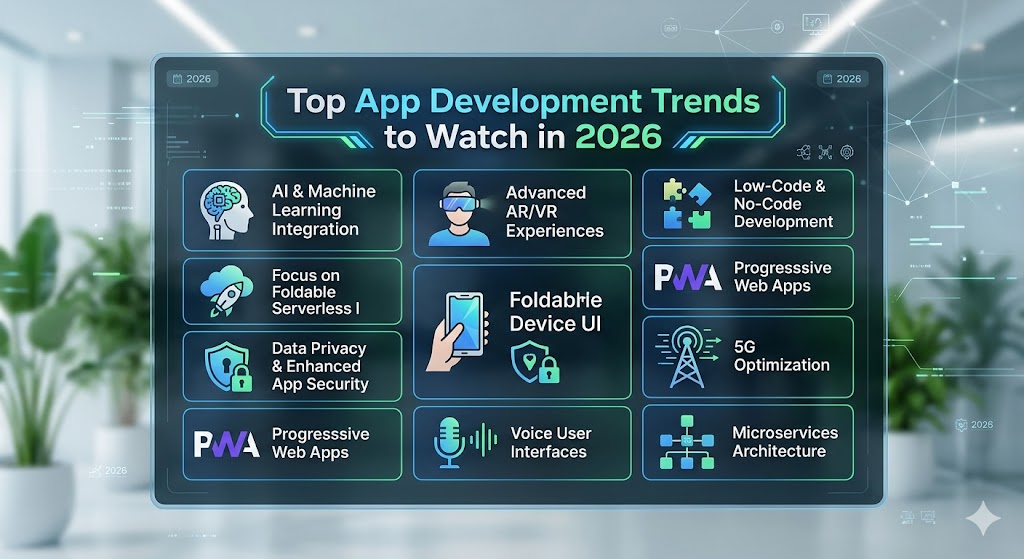
The mobile app industry is evolving faster than ever before. In 2026, businesses are no longer building apps simply for online presence. Modern applications are now focused on artificial intelligence, immersive experiences, automation, enhanced security, and hyper-personalization. As smartphones become more powerful and internet technologies continue advancing, app developers are adopting innovative solutions to meet growing user expectations.
The global app economy is expected to expand significantly due to increasing smartphone usage, 5G adoption, cloud computing, and AI integration. Companies across industries such as healthcare, education, finance, entertainment, retail, and logistics are investing heavily in mobile and web applications to improve customer experiences and streamline operations.
Understanding the latest app development trends is essential for developers, startups, entrepreneurs, and enterprises that want to remain competitive in the digital marketplace. This article explores the top app development trends to watch in 2026, including emerging technologies, business impacts, future opportunities, and industry transformations.
1. AI-Powered App Development
The Rise of Artificial Intelligence in Apps
Artificial Intelligence has become one of the most important technologies in app development. In 2026, AI is no longer an optional feature but a core component of modern applications.
Apps are now using AI for:
- Personalized recommendations
- Predictive analytics
- Smart automation
- Voice recognition
- Image processing
- Customer support
- Fraud detection
- Behavioral analysis
AI-powered apps can learn user preferences and improve performance over time.
Popular AI Features in Modern Apps
AI Chatbots and Virtual Assistants
Businesses are integrating intelligent chatbots into apps to provide 24/7 customer support.
Personalized User Experience
Streaming apps, eCommerce platforms, and social media apps use AI algorithms to recommend content based on user behavior.
AI-Based Automation
Apps can automate repetitive tasks such as scheduling, document scanning, and data analysis.
Predictive Search
AI improves search accuracy and predicts what users are looking for before they complete typing.
Why AI Is Dominating App Development
Artificial intelligence improves:
- User engagement
- Customer retention
- Operational efficiency
- Data analysis
- Automation
- Decision-making
Companies investing in AI-driven applications are gaining a competitive advantage in the digital market.
2. 5G Technology Integration
How 5G Is Transforming Mobile Apps
The expansion of 5G networks is revolutionizing app performance and connectivity. Compared to previous mobile network generations, 5G offers:
- Faster internet speeds
- Lower latency
- Improved reliability
- Better bandwidth capacity
This technology allows developers to create more advanced and responsive applications.
Benefits of 5G for App Development
Faster Data Processing
Apps can load content almost instantly.
Improved Streaming Quality
Video streaming, gaming, and live broadcasting apps perform more smoothly.
Better AR and VR Experiences
5G supports high-speed data transfer required for immersive technologies.
Enhanced Cloud Computing
Cloud-based apps can process data faster with minimal delays.
Industries Benefiting From 5G Apps
- Healthcare
- Gaming
- Education
- Logistics
- Entertainment
- Smart homes
- Automotive
5G is expected to become one of the biggest drivers of mobile innovation in 2026.
3. Cross-Platform App Development
Growing Demand for Multi-Platform Applications
Cross-platform development allows developers to build apps for both Android and iOS using a single codebase.
In 2026, businesses are increasingly adopting cross-platform frameworks to reduce development costs and speed up deployment.
Popular Cross-Platform Frameworks
- Flutter
- React Native
- Kotlin Multiplatform
- Xamarin
- Ionic
Advantages of Cross-Platform Development
Faster Development
Developers can launch apps on multiple platforms simultaneously.
Lower Costs
Using one codebase reduces development expenses.
Easier Maintenance
Updates and bug fixes can be applied across platforms efficiently.
Consistent User Experience
Cross-platform apps maintain similar designs and functionality.
Why Flutter and React Native Lead the Market
Flutter and React Native continue dominating because of:
- Faster performance
- Large developer communities
- Rich UI capabilities
- Faster updates
- Strong scalability
Cross-platform development is expected to remain one of the most cost-effective app development strategies.
4. Augmented Reality and Virtual Reality Apps
Immersive Technology Is Becoming Mainstream
Augmented Reality and Virtual Reality are rapidly transforming user experiences across multiple industries.
AR overlays digital content onto the real world, while VR creates fully immersive virtual environments.
Industries Using AR and VR Apps
Gaming
Immersive gaming experiences continue driving AR and VR innovation.
Retail
Customers can virtually try products before purchasing.
Healthcare
Medical training and remote surgeries use AR and VR simulations.
Real Estate
Virtual property tours help buyers explore homes remotely.
Education
Interactive learning environments improve engagement.
Key Benefits
- Enhanced user engagement
- Interactive experiences
- Better product visualization
- Improved training systems
- Higher customer satisfaction
Future of AR and VR Apps
As wearable technology and spatial computing improve, AR and VR applications will become more advanced and accessible.
5. Internet of Things (IoT) App Development
Connected Devices Are Expanding Rapidly
The Internet of Things refers to networks of connected devices that communicate through the internet.
In 2026, IoT apps are playing a major role in:
- Smart homes
- Smart cities
- Healthcare monitoring
- Industrial automation
- Agriculture
- Transportation
Examples of IoT Applications
Smart Home Apps
Users can control lights, cameras, thermostats, and appliances remotely.
Healthcare Monitoring Apps
Wearable devices track heart rate, sleep patterns, and fitness activities.
Industrial IoT Solutions
Factories use IoT sensors for predictive maintenance and automation.
Key Benefits
- Real-time monitoring
- Increased efficiency
- Automation
- Remote management
- Energy optimization
Challenges in IoT Development
Developers must focus on:
- Security
- Data privacy
- Connectivity
- Scalability
- Device compatibility
IoT is expected to remain one of the fastest-growing sectors in app development.
6. Blockchain App Development
Blockchain Beyond Cryptocurrency
Blockchain technology is no longer limited to cryptocurrencies. In 2026, developers are using blockchain to improve transparency, security, and decentralized systems.
Industries Adopting Blockchain Apps
- Finance
- Healthcare
- Supply chain
- Gaming
- Real estate
- Digital identity management
Popular Blockchain App Features
Secure Transactions
Blockchain ensures tamper-proof financial transactions.
Smart Contracts
Automated agreements reduce manual processes.
Decentralized Applications (DApps)
Apps operate without centralized servers.
Digital Asset Management
NFTs and tokenized assets continue evolving.
Advantages of Blockchain Apps
- High security
- Transparency
- Decentralization
- Reduced fraud
- Improved trust
Why Blockchain Matters in 2026
Increasing cybersecurity concerns are pushing businesses toward decentralized technologies.
7. Super Apps
The Growing Popularity of All-in-One Platforms
Super apps combine multiple services within one application.
Instead of downloading separate apps for payments, shopping, messaging, transportation, and food delivery, users can access everything from a single platform.
Examples of Super App Services
- Mobile payments
- Messaging
- Ride booking
- Food delivery
- Online shopping
- Banking
- Travel booking
Why Super Apps Are Trending
Convenience
Users prefer centralized digital ecosystems.
Higher User Retention
Businesses can keep users engaged longer.
Increased Revenue Opportunities
Multiple services generate diverse income streams.
Markets Leading Super App Growth
- Asia
- Middle East
- Africa
- Emerging digital economies
Super apps are expected to expand globally as companies compete for digital ecosystem dominance.
8. Cloud-Based App Development
Cloud Technology Is Reshaping Applications
Cloud computing allows apps to store and process data remotely instead of relying entirely on local devices.
In 2026, cloud-native applications are becoming standard for scalability and flexibility.
Benefits of Cloud-Based Apps
Reduced Storage Requirements
Apps consume less device storage.
Improved Scalability
Businesses can scale resources based on demand.
Faster Performance
Cloud infrastructure improves app responsiveness.
Better Collaboration
Teams can access shared data in real time.
Popular Cloud Platforms
- Amazon Web Services
- Microsoft Azure
- Google Cloud Platform
- Firebase
Industries Using Cloud Apps
- Healthcare
- Education
- Finance
- Remote work
- Streaming services
Cloud integration continues driving app innovation and operational efficiency.
9. Low-Code and No-Code Development
Faster App Creation for Businesses
Low-code and no-code platforms are changing how apps are built.
These tools allow users to create applications with minimal programming knowledge.
Advantages of Low-Code Platforms
Faster Development Cycles
Apps can be built quickly using visual interfaces.
Reduced Costs
Businesses save money on development resources.
Easier Prototyping
Startups can test ideas rapidly.
Accessibility
Non-technical users can participate in app creation.
Popular Low-Code Platforms
- Bubble
- OutSystems
- Mendix
- Appgyver
- Microsoft Power Apps
Why This Trend Is Growing
The increasing demand for digital solutions has created a shortage of professional developers, making low-code platforms highly valuable.
10. Cybersecurity-Focused App Development
Security Is Becoming a Top Priority
As cyber threats increase globally, security is becoming one of the most important aspects of app development.
Modern apps now integrate advanced security systems directly into their architecture.
Important Security Features
Multi-Factor Authentication
Additional verification layers improve account protection.
Biometric Authentication
Fingerprint and facial recognition increase security.
End-to-End Encryption
Sensitive data remains protected during communication.
AI-Based Threat Detection
Artificial intelligence helps identify suspicious activities.
Industries Prioritizing App Security
- Banking
- Healthcare
- Government
- eCommerce
- Enterprise software
Why Security Matters More in 2026
Data privacy regulations and rising cyberattacks are forcing businesses to invest heavily in secure applications.
11. Wearable App Development
The Expansion of Smart Wearables
Wearable technology continues growing rapidly in 2026.
Apps for smartwatches, fitness trackers, AR glasses, and healthcare devices are becoming increasingly sophisticated.
Popular Wearable Applications
- Health monitoring
- Fitness tracking
- Mobile payments
- Smart notifications
- Remote communication
Benefits of Wearable Apps
- Real-time health data
- Improved fitness management
- Enhanced convenience
- Hands-free interaction
Future Potential
Wearables combined with AI and IoT will create smarter personal ecosystems.
12. Voice Technology and Conversational Apps
Voice Interfaces Are Becoming More Intelligent
Voice-based interactions are growing due to advancements in natural language processing and AI assistants.
Modern applications now support voice search, voice commands, and conversational interfaces.
Common Uses of Voice Technology
- Smart assistants
- Customer support
- Voice navigation
- Smart home control
- Accessibility support
Advantages of Voice-Enabled Apps
- Faster interaction
- Better accessibility
- Hands-free convenience
- Improved user experience
Voice technology is expected to play a larger role in app interfaces during the coming years.
Key Challenges Facing App Developers in 2026
Increasing User Expectations
Users now expect faster, smarter, and more personalized applications.
Rising Cybersecurity Risks
Developers must protect apps from evolving threats.
Device Fragmentation
Apps must work across different devices and operating systems.
High Competition
Millions of apps compete for visibility in app stores.
Privacy Regulations
Developers must comply with global data protection laws.
Future of App Development Beyond 2026
The future of app development will likely include:
- AI-generated applications
- Advanced spatial computing
- Brain-computer interfaces
- Fully immersive digital environments
- Hyper-personalized experiences
- Autonomous AI agents
Technology will continue transforming how users interact with digital products and services.
FAQs About App Development Trends in 2026
What is the biggest app development trend in 2026?
Artificial intelligence is considered the biggest app development trend because of its impact on automation, personalization, analytics, and user experience.
Why is 5G important for mobile apps?
5G improves app speed, responsiveness, streaming quality, and real-time communication capabilities.
Are cross-platform apps better than native apps?
Cross-platform apps are cost-effective and faster to develop, while native apps may provide slightly better performance for complex applications.
What industries benefit most from app development trends?
Healthcare, finance, retail, education, entertainment, logistics, and smart home industries benefit significantly from modern app technologies.
What are super apps?
Super apps combine multiple services such as messaging, payments, shopping, and transportation within one platform.
Is blockchain important for app development?
Yes. Blockchain improves security, transparency, and decentralization for modern applications.
What is low-code development?
Low-code development uses visual tools and minimal coding to build applications faster.
How does AI improve mobile apps?
AI improves personalization, automation, predictive analysis, customer support, and user engagement.
Why is cybersecurity critical in app development?
Cybersecurity protects sensitive user data and prevents hacking, fraud, and unauthorized access.
Will AR and VR apps continue growing?
Yes. AR and VR technologies are expected to expand significantly in gaming, retail, education, healthcare, and entertainment.
App development in 2026 is being driven by innovation, intelligence, automation, and immersive technologies. Businesses that adopt modern trends such as AI integration, 5G connectivity, cloud computing, blockchain, and IoT will be better positioned to meet evolving user expectations and remain competitive in the digital landscape.
As technology continues advancing, developers must focus not only on functionality but also on security, personalization, scalability, and seamless user experiences. The future of app development promises exciting opportunities for businesses, developers, and users around the world.